About Paul

This author has not yet filled in any details.
So far Paul has created 331 blog entries.

How to play Ukulele! introduction

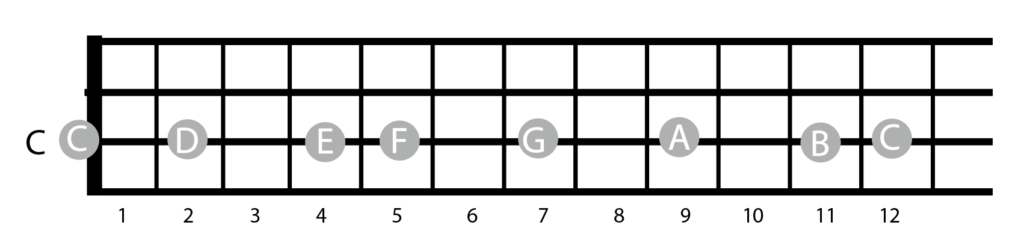
Getting started with Ukulele! The video shows how to tune your uke in standard tuning and play a C scale two different ways. I made this video for a pair of young students and I thought it was worthwhile posting it here too. An understanding of the way scales work helps us better understand how chords work too! Please enjoy the video and don’t forget to download the pdf file.

Download the accompanying pdf file here: https://drive.google.com/file/d/1N81_nwyjTf9aazm521Lcs3r_abjuTCFA/view?usp=sharing

2026-03-10T15:49:55-04:00

How to play “Take it to the limit”

How to play take it to the limit on guitar. Download the chord and lyric sheet here:  Take It To The Limit

“Take It to the Limit” is a song by the Eagles from their fourth album One of These Nights from which it was issued as the third and last single on November 15, 1975. It reached No. 4 on the U.S. Billboard Hot 100 and was also Eagles’ greatest success to that point in the United Kingdom, going to No. 12 on the charts. Billboard ranked it as the No. 25 song for 1976.

The song, written by Eagles members Randy MeisnerDon Henley and Glenn Frey, began as a solo composition by Meisner, who sang lead on it. As it remained unfinished when time came for the One of These Nights album to be recorded, Henley and Frey assisted Meisner in completing it. Meisner’s performance of the song was popular with the audience in Eagles concerts but disputes over his reluctance to perform it would also directly lead to Meisner’s departure from the band.

Composition

According to Meisner, he wrote the first few lines of the song one night while playing an acoustic guitar after returning from the Troubadour; however he was […]

2026-03-21T07:58:29-04:00

How hard do you press on the strings?

Press with just enough force to let the note ring clearly, and that’s it!  Guitar necks come with different heights of fret wire and there  are advantages and disadvantages to both tall and short frets. A neck with short frets lets the fretboard wood stop your finger from pressing any harder – but if  you rely on that, you may already be pressing too hard. Not pressing too hard on the string allows your fingers to work more efficiently, and that means faster, smoother movement. That is essential for playing the way you want to sound, with good tone, in tune and in time.

Taller frets (or a scalloped fretboard)  make string bending fairly easy. There’s plenty of space between the string and the fingerboard to let you get a good grip. Hammer-ons, pull-offs and the like are also easier. Taller frets might lead to intonation issues though from players pushing too hard (with no fingerboard to stop them) and making the note sharper than intended.  I’ve read that going to taller frets also can present a bit of a learning curve for many players. You’ll generally get longer wear out of a taller fret and you can have it dressed more often, although a fret made with harder metal (stainless steel instead of nickel) might solve that problem.

A medium-height  fret is probably a better […]

2026-03-09T19:45:43-04:00

Tennessee Waltz simple melody part 1

Tennessee Waltz sheet music and chord chart.

Chords and strumming pattern “Tennessee Waltz”. This is a lovely, stately old tune, and not too difficult to play as a fingerstyle piece. The first video has a simple fingering for the first part of the melody.

If you’re interested in learning guitar or learning to play guitar better, I’m your guy. I live in New Jersey but teach online guitar lessons coast-to-coast. If you’d like to see if I’m a good fit for you, the first online lesson is free! Nothing to lose except a little time, and we’ll both enjoy meeting a fellow guitar enthusiast. Let’s chat!

2026-03-09T19:45:58-04:00

Push Off

How to play “Push Off” by the Palms for easy guitar. You can download the chord chart for this great song below, and view the video for strumming pattern and chord fingering positions.

“The irony of multitasking is that it’s exhausting: when you’re doing two or three things simultaneously, you use more energy than the sum of energy required to do each task independently. You’re also cheating yourself because you’re not doing anything excellently. You’re compromising your virtuosity. In the words of T. S. Eliot, you’re ‘distracted from distractions by distractions’.” -Twyla Tharp, The Creative Habit

2026-03-16T18:56:12-04:00

Hey Jude

Hey_Jude part 1 lesson with Tabs
This video and chart can help you play the melody of “Hey Jude” in the first position. Set your fingers for each chord as the chord charts indicate. Being deliberate about where your fingers go is pretty important for moving ahead with guitar playing! Be patient… and enjoy your success!

Download chord/lyrics guitar PDF

How to play “Hey Jude” on guitar. This is a great tune for solo guitar and vocal accompaniment! And it’s not too hard to get under your hand. Hey Jude! The Beatles 1968. The song’s original title was “Hey Jules“, and it was intended to comfort Julian from the stress of his parents’ separation. McCartney said, “I knew it was not going to be easy for him”, and that he changed the name to “Jude” “because “I thought that sounded a bit better”.

I think people who create and write, it actually does flow-just flows from into their head, into their hand, and they write it down. It’s simple.

Paul McCartney

2026-03-21T10:37:12-04:00

Major Intervals

Download a PDF of this material here:

Intervals are the spaces between the notes. For a major scale (do re me fa so la ti do) the intervals are: whole step, whole step, half step, whole step, whole step, whole step, half step.

W W H W W W H

On the neck of the guitar each fret represents a half step, so notes that are separated by one fret- in other words, frets not next to one another but with a fret between them- are a whole step apart.

We can easily play a major scale from any open string! The name of the string will also be the name of the major scale. For instance, an E major scale (EM, EMaj or E with a triangle after it) from the 6th string stats with the open E. Then put your pointer finger on the 2nd fret and play that note. Next put your pointer finger on the 4th, 5th, 7th, 9th and 11th fret in that order. Lastly, put your finger on the 12th fret (the one with two fret markers usually). That is the octave, so you have played all the notes in the major scale! Practice this on all six strings. We don’t have to start at the open string. For instance, we can start at the 3rd fret of the […]

2026-03-09T19:46:19-04:00

Nobody Knows You

Download the Chord/lyric sheet

“Nobody Knows You When You’re Down and Out” is a blues standard written by pianist Jimmie Cox in 1923 and originally performed in a Vaudeville-blues style. The lyrics in the popular 1929 recording by Bessie Smith are told from the point of view of somebody who was once wealthy during the Prohibition era and reflect on the fleeting nature of material wealth and the friendships that come and go with it. Since her 1929 recording, the song has been interpreted by numerous musicians in a variety of styles.

“Music is the great uniter. An incredible force. Something that people who differ on everything and anything else can have in common.” – Sarah Dessen

2026-03-09T19:46:39-04:00

Stand by me

Download PDF

Stand by Me” is a song originally recorded by American singer-songwriter Ben E. King in 1961, and written by him, along with Jerry Leiber and Mike Stoller, who together used the pseudonym Elmo Glick. According to King, the title is derived from, and was inspired by, a spiritual written by Sam Cooke and J. W. Alexander called “Stand by Me Father”, recorded by the Soul Stirrers with Johnnie Taylor singing lead.

“Stand by Me” was featured on the soundtrack of the 1986 film Stand by Me, and a corresponding music video, featuring King along with actors River Phoenix and Wil Wheaton, was released to promote the film. The song was also featured in a 1987 European commercial of Levi’s 501 jeans, contributing to greater success in Europe. In 2012, its royalties were estimated to have topped $22.8 million (£17 million), making it the sixth highest-earning song of its era. Fifty percent of the royalties were paid to King. In 2015, King’s original version was inducted into the National Recording Registry by the Library of Congress, as “culturally, historically, or aesthetically significant”,[4] just under five weeks before his death. Later in the year, the 2015 lineup of the Drifters recorded it in tribute.

There have been over 500 recorded versions of the song,

2026-03-10T12:53:31-04:00
Go to Top